Managing indoor air moisture is a critical, yet often overlooked, component of successful plant care. While temperature and light are frequently monitored, humidity levels directly impact a plant’s ability to transpire and maintain lush, green foliage.
Tropical Plants: Require high humidity (60%–80%) to prevent browning leaf tips.
Subtropical Plants: Thrive in moderate levels (40%–60%).
Arid Plants: Succulents and cacti prefer low humidity (10%–30%).
The "Goldilocks" Zone: Most indoor environments stay around 30%–50%, which requires supplementation for tropical species.
Understanding Humidity Requirements
In their native habitats, plants are adapted to specific atmospheric moisture levels. When moved indoors, tropical species often struggle with the dry air produced by heating and cooling systems. Conversely, arid species can suffer from fungal issues if the air is too stagnant or moist.
Ideal Humidity Levels by Plant Type
The following table outlines the specific requirements for popular houseplant categories to help you group your collection effectively:
Pothos, Monsteras, Philodendrons, Ficus
Jade Plants, Aloe Vera, Haworthia, Echeveria
Signs Your Plant Needs More Humidity
Recognizing the physical symptoms of low humidity early can prevent long-term damage to the plant's structure:
Crispy Leaf Edges: Brown, brittle margins on leaves often indicate that moisture is evaporating from the foliage faster than the roots can replace it.
Dropping Buds: Flowering plants may drop their buds before they have a chance to bloom if the air is excessively dry.
Curling Leaves: Some species will physically curl their leaves inward to reduce the surface area exposed to dry air.
If your home falls below the target range for your specific plants, there are several practical methods to supplement the air moisture:
Grouping Plants: Plants naturally release moisture through transpiration. By grouping them together, you create a localized microclimate with higher humidity.
Pebble Trays: Placing a pot on a tray filled with pebbles and water (with the water level below the base of the pot) allows for consistent evaporation around the foliage.
Humidifiers: For large collections of tropical plants, a dedicated room humidifier is the most reliable way to maintain a constant percentage.
Misting: While temporary, misting provides a short-term boost, though it is less effective than other long-term solutions.
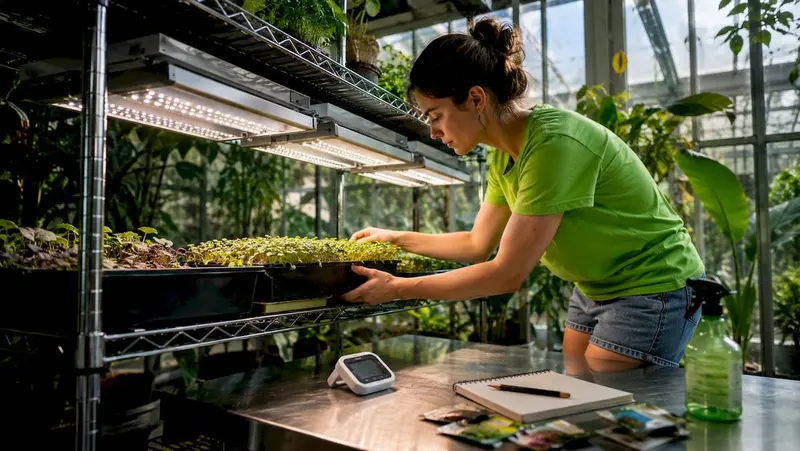
Maintaining humidity is easier when other environmental factors are stable. By using highly efficient LED grow lights, you can maintain optimal light levels for tropical species without inadvertently lowering the humidity around their foliage.
Achieving the correct humidity level is a balance between the plant's biological needs and your home's unique environment. By categorizing your plants by their native requirements and monitoring for signs of stress, you can ensure your indoor garden remains vibrant and healthy year-round. For the results, aim to maintain a stable environment, as drastic fluctuations in moisture can be just as stressful as consistently low levels.


질문 및 토론
궁금한 점이 있거나 유용한 정보를 공유하고 싶으신가요? 대화를 시작해 보세요.