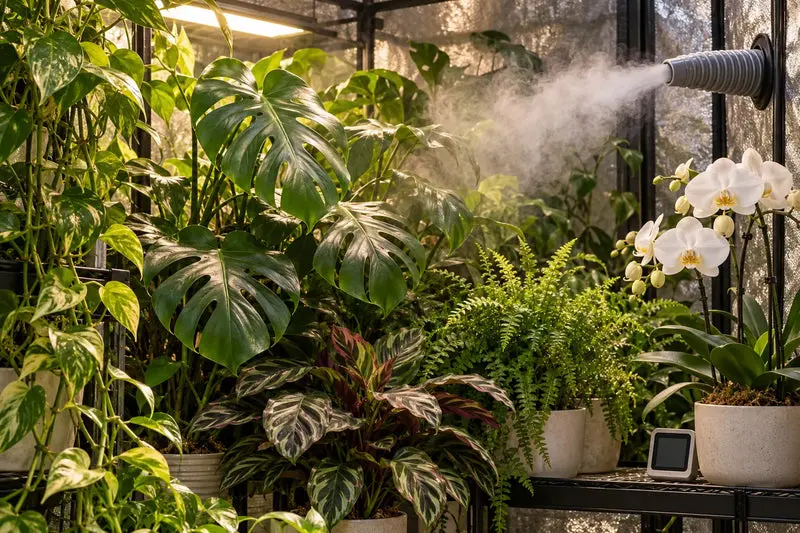
Winter can be a challenging season for tropical houseplants. Your monstera may develop crispy leaf edges, your favorite fern might look less lush, and the air around your orchids can feel noticeably drier once the heat starts running.
The solution starts with understanding the conditions around your plants. A hygrometer helps you measure humidity, a humidifier adds moisture when needed, and a compatible controller helps maintain more consistent conditions.
Here’s how to manage winter humidity for tropical houseplants while keeping your growing space comfortable, clean and free of persistent condensation.
Why Winter Air Can Be Hard on Tropical Houseplants
Relative humidity describes how much moisture the air contains compared with how much it could hold at that temperature. When cold outdoor air enters your home and warms up, its relative humidity drops unless moisture is added.
That helps explain why a comfortable heated room can still feel dry to moisture-loving plants.
However, tropical houseplants do not all have identical needs. Consider the species, temperature, light and growing environment together rather than choosing one humidity setting for every plant. Penn State Extension emphasizes that there is no single ideal humidity level for all houseplants.
What Humidity Do Tropical Houseplants Need in Winter?
For plants growing in an occupied room, start by balancing plant needs with the moisture limits of your home. EPA guidance generally recommends indoor relative humidity between 30% and 50%. During very cold weather, even that upper limit may cause condensation on windows or other cold surfaces.
Some tropical plants benefit from more humidity than a winter living room can comfortably support. Penn State notes that monstera prefers humidity above 50%, while the American Orchid Society gives a broad range of 40%–70% for many orchids, accompanied by appropriate air movement. Those are plant preferences—not instructions to raise your entire house to 70%.
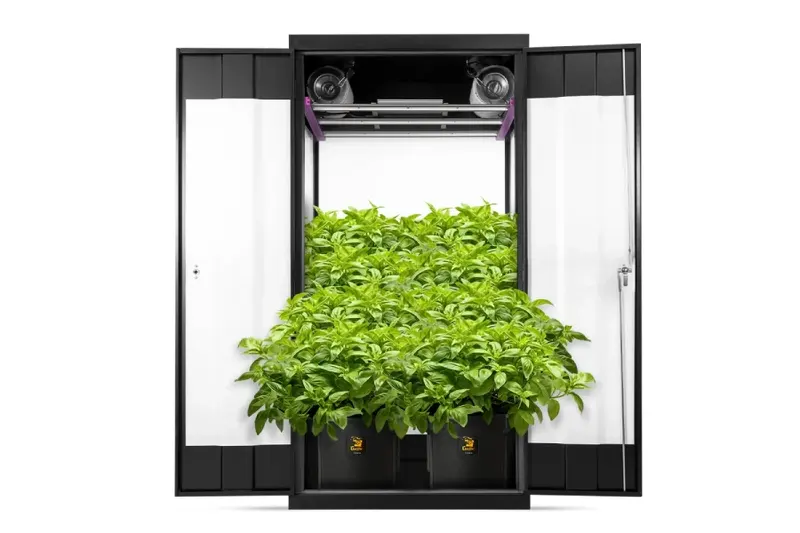
A grow tent or plant cabinet can help create a separate environment for plants that need it. For a mixed tropical collection, 50%–60% RH can be a practical enclosure starting point, adjusted for the plants you own and how the enclosure behaves.
Check the surrounding room, too. A tent still releases moisture when ventilated or opened.
Measure Before You Add More Moisture
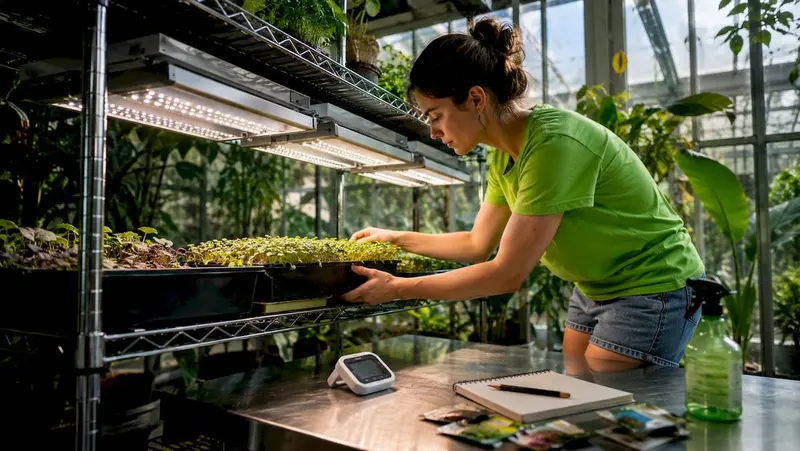
Place the sensor near foliage height.
Keep it away from direct humidifier mist.
Avoid heating vents, cold window glass and direct grow-light heat.
Check conditions during the day and after lights turn off.
Use minimum/maximum readings or a history graph to spot fluctuations.
Temperature matters because relative humidity can rise as the air cools overnight. A tent that looks comfortable during the day may become too damp after lights out.
Inside an enclosure, a second hygrometer in the surrounding room helps you monitor both environments.
Do Crispy Leaves Always Mean Low Humidity?
Brown tips and dry edges can make you suspect low humidity, but they do not identify the cause by themselves.
Before increasing humidity, check for inconsistent watering, fertilizer buildup, root problems, pests and exposure to heating vents. Increasing moisture in the air will not correct damaged roots or a waterlogged pot.
Also, avoid compensating for dry air by automatically watering more often. Plants receiving less winter light may use less water, even when the room feels dry. Check the potting mix and the needs of each plant rather than following a fixed summer watering schedule.
Choose a Humidifier That Fits Your Growing Space
The humidifier is one you can adjust, maintain and position appropriately.
For a small plant enclosure, controllable low output may be more useful than maximum capacity. For a larger plant room, tank capacity and coverage become more important.
A humidistat or compatible controller connection.
Automatic shutoff when the tank is empty.
Confirm the features of the particular model before choosing equipment.
Direct the humidifier output into open air where moisture can disperse. Avoid aiming it continuously at leaves, orchid flowers, sensors, electrical equipment or the tent wall.
A visible plume near the outlet can be normal. A constantly foggy enclosure, dripping foliage or collecting water means you should reassess output, placement and ventilation.
Keep electrical connections outside the mist path, follow equipment installation instructions and inspect nearby surfaces for dampness.
The goal is controlled humidity—not a continuously wet growing environment.
Use a Controller for More Consistent Conditions
A compatible temperature and humidity controller can reduce manual adjustments by responding to readings from a sensor.
Before connecting equipment, check:
Whether the controller supports your humidifier.
Whether it controls output or simply switches power.
Whether the humidifier restarts automatically after power is restored.
The controller’s electrical load limits.
Sensor placement and available humidity settings.
For example, an enclosure controller might be configured to start humidification below 50% RH and stop near 55%, if that equipment supports separate switching thresholds. Treat this as an example, not a universal prescription.
Avoid conflicting settings between the humidifier’s own controls and an external controller. After setup, observe several operating cycles before relying on automation.
Humidity and air movement work together. Leave space between plants and provide gentle circulation so moisture does not linger in crowded pockets.
A circulation fan mixes air, but it does not remove water vapor from a closed tent. When humidity stays too high, you may need less humidifier output, more air exchange with drier air, or another moisture-control adjustment.
Orchids particularly benefit from balancing humidity with air movement. Persistent wetness around leaves and flowers is different from providing appropriately humid air.
Humidifier maintenance is part of plant care.
Follow the manufacturer’s cleaning instructions. EPA guidance recommends emptying, drying and refilling portable humidifier tanks daily, with cleaning every third day unless the manufacturer specifies otherwise.
For ultrasonic units, distilled or other manufacturer-approved low-mineral water helps reduce mineral deposits and airborne mineral dust. Do not assume that water labeled “filtered” has had its dissolved minerals removed.
Reduce output if windows, walls or surrounding materials become damp.
Will misting leaves replace a humidifier?
Misting creates a brief change around the leaves rather than maintaining a consistent humidity level. It should not replace measuring conditions and managing the surrounding air.
Do tropical plants need a grow tent?
Many houseplants can grow successfully in ordinary rooms with appropriate light, watering and placement. An enclosure is an option for collections that need a more controlled environment.
Should I run the humidifier overnight?
Let measured conditions guide operation. Because humidity can rise as temperatures fall, overnight output may need to be lower than daytime output. Check your recorded minimum and maximum readings.
Can I increase humidity around just my plants?
A cabinet or grow tent offers more control over a smaller area. Grouping plants can also influence their immediate surroundings, but the effect varies with the number of plants and the size of the room.
Build a More Comfortable Winter Plant Space
Start with measurements, make gradual adjustments and watch how your plants and growing space respond.
Need help choosing compatible equipment?
Penn State Extension: Humidity and Houseplants
Penn State Extension: Monstera as a Houseplant
American Orchid Society: Humidity and Air Movement
Environmental Protection Agency: Use and Care of Home Humidifiers
University of Minnesota Extension: Controlling Moisture Problems in Your Home

Questions & discussion
Have a question or something useful to share? Start the conversation.