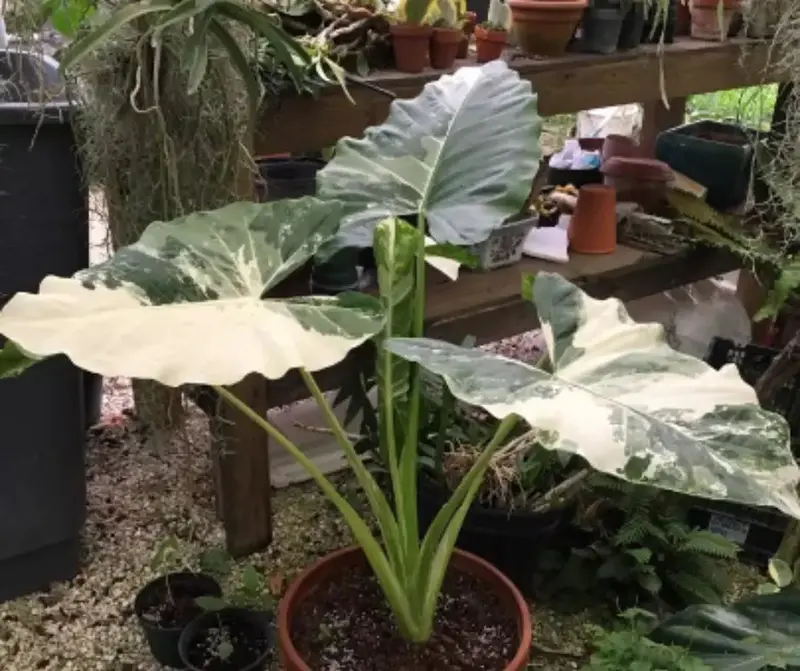
If you’ve ever brought home a Monstera Albo or a Marble Queen Pothos, you’ve likely marveled at the striking white splashes on their leaves.
The answer lies in a fascinating biological trade-off.
The white parts of a variegated leaf are white because they lack chlorophyll, the green pigment responsible for photosynthesis. While the green sections of the leaf are busy converting sunlight into energy, the white sections are essentially "freeloading"—they are unable to produce food for the plant.
Variegation is rarely an accident; it is typically caused by one of three primary factors:
Genetic Mutation: In most popular houseplants, white patches are caused by a chimera mutation. This is where a plant has two different types of chromosomal makeup in its tissue. One set of cells can produce chlorophyll, while the other cannot. Check out this article from UC Agriculture and Natural Resources for more information on the chimera mutation in plants!
Reflective Variegation: Sometimes, leaves look white or silver because of air pockets between the leaf's surface and the internal pigment. This "blistering" effect is common in plants like the Scindapsus pictus also known as the Satin Pothos.
Viral Infections: While less common in the nursery trade, certain viruses can cause mosaic patterns that bleach the green out of leaves.
Is White Variegation Bad for the Plant?
In the wild, white variegation is a disadvantage. Because white tissue cannot photosynthesize, a plant with too much white may grow slower or become weaker than a solid green variety.
Expert Tip: If your plant starts producing "all-white" leaves, it may be in trouble. Without green tissue to provide energy, those white leaves will eventually brown and die. This is why many growers prune back to a "stable" variegated node to encourage more green growth.
Because variegated plants have less "solar panel" space (chlorophyll) to work with, they require slightly different care than standard plants:
More Light, Not Less: Variegated plants need bright, indirect light. If the light is too low, the plant may "revert" to solid green as it tries to create more chlorophyll to survive.
Avoid Direct Sun: White tissue is incredibly delicate. Without the protection of pigments, the white sections of the leaf can scorch easily under direct afternoon sun.
Consistent Moisture: Because they are often slower growers, variegated plants are more sensitive to overwatering. Always check the top two inches of soil before watering.
Powering Variegation: Why Quality Light Matters
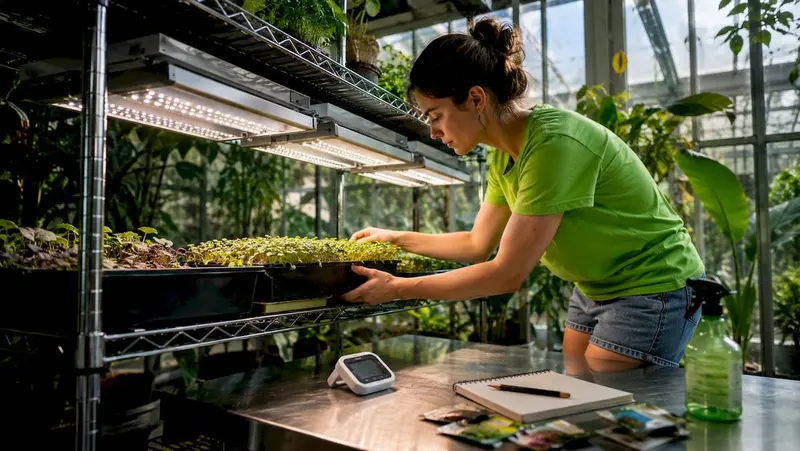
Because white leaf patches lack chlorophyll, they act as "energy drains" rather than producers. To prevent the plant from "reverting" to solid green to survive, you must provide high-intensity light that signals it has enough energy to maintain its variegation
This helps maintain high-contrast white patterns without the harsh heat of standard bulbs that can scorch delicate, pigment-free tissue
Structured Success: To ensure your plant thrives, use a consistent 12–16 hour light cycle. This provides the light your plant needs to continue producing white cells instead of switching back to survival-mode green.
Summary Checklist for Variegated Success
Identify the type: Is it a stable genetic trait or a mutation?
Monitor the ratio: Ensure your plant has enough green to feed itself.
Optimize placement: Provide high-quality indirect light to maintain the white coloring.


Questions & discussion
Have a question or something useful to share? Start the conversation.