How Far Should LED Grow Lights Be From Plants: Finding the Balance
Determining the ideal distance between LED grow lights and plants is one of the most critical factors for successful indoor growing. Too close, and you risk light burn and heat stress; too far, and your plants become leggy while producing smaller yields. With advanced lighting technology like GXi LED Grow Lights, understanding proper light positioning becomes even more important to maximize the benefits of their features. This comprehensive guide will help you position your grow lights for optimal results across every stage of plant development.
Understanding the Science Behind LED Grow Light Distance
The Inverse Square Law: Why Distance Matters
The relationship between light intensity and distance follows the inverse square law, which has profound implications for your indoor garden:
When you double the distance from the light source, intensity decreases to one-fourth of its original value
Conversely, moving lights half the distance increases intensity four times
This exponential relationship means small distance adjustments can significantly impact plant growth
This scientific principle explains why finding the precise hanging height is so crucial. Unlike older lighting technologies with intense heat output that mandated greater distances, modern LED grow lights like the GXi series can be positioned closer to plants while still providing ideal growing conditions.
Light Intensity and PPFD Measurements
Professional growers measure light intensity using Photosynthetic Photon Flux Density (PPFD), expressed in micromoles per square meter per second (μmol/m²/s). This quantifies the number of photosynthetically active photons hitting your plant canopy:
Seedlings and clones: 200-400 μmol/m²/s
Vegetative growth: 400-600 μmol/m²/s
GXi LED Grow Lights deliver precisely calibrated light intensity across their coverage area, with the ability to adjust their tri-channel spectrum to match each growth phase perfectly. This means you can maintain optimal PPFD levels while adjusting spectrum rather than constantly changing light heights.
Growth Stage-Specific Distance Guidelines
Seedling and Clone Stage: Gentle Beginnings
Young plants and newly rooted clones are particularly vulnerable to light stress, requiring more conservative light positioning:
Recommended distance: 24-30 inches (60-75 cm)
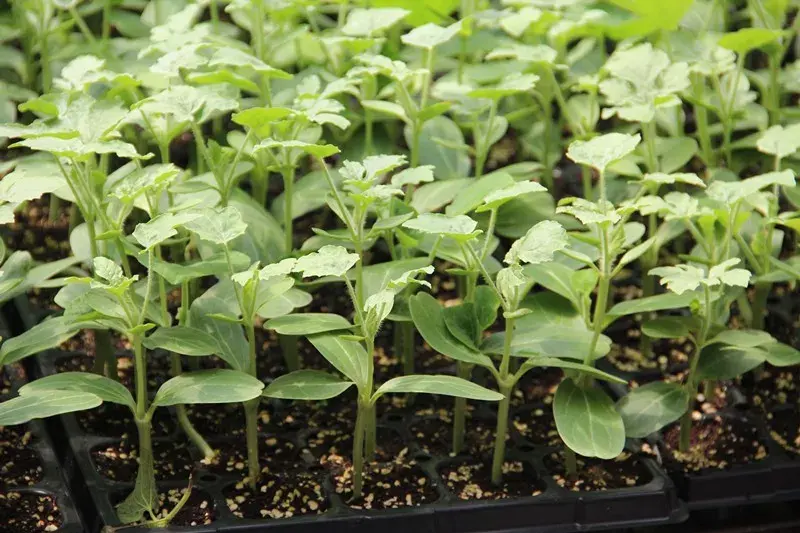
Signs of proper distance: Seedlings grow short, sturdy stems with healthy cotyledons
Warning signs of too close: Yellowing leaves, stunted growth, or cupping of leaves
Warning signs of too far: Elongated, weak stems as plants stretch toward light
During this delicate stage, GXi LED Grow Light's customizable spectrum technology allows you to emphasize blue wavelengths while reducing overall intensity, providing gentler light that promotes strong root development without stress.
Vegetative Stage: Building Plant Infrastructure
As plants develop their vegetative structure, they require more intense light to build sturdy stems and lush foliage:
Recommended distance: 18-24 inches (45-60 cm)
Signs of proper distance: Compact internodal spacing, robust stem development, and deep green leaves
Warning signs of too close: Upward curling leaves, light bleaching at leaf tips, or stunted new growth
Warning signs of too far: Elongated stems, smaller leaf development, and overall slower growth rate
The GXi LED Grow Light's optimized spectrum for vegetative growth delivers enhanced blue wavelengths at this stage, encouraging tight internodal spacing and sturdy structural development that will support heavy flower production later.
Early Flowering Stage: Transition Period
As plants transition to flowering, they undergo significant hormonal changes that affect their light requirements:
Signs of proper distance: Formation of early flower sites throughout the canopy
Warning signs of too close: Bleached or burnt uppermost leaves and buds
Warning signs of too far: Limited flower site development, especially in lower portions
During this transition, the GXi LED Grow Light's tri-channel control allows growers to gradually shift the spectrum toward enhanced red wavelengths while maintaining ideal light intensity, signaling to plants that it's time to focus energy on flower production.
Peak Flowering Stage: Maximizing Yields
During peak flowering, plants benefit from intense light with specialized spectral components:
Recommended distance: 12-18 inches (30-45 cm)
Signs of proper distance: Dense, resinous flower development throughout the canopy
Warning signs of too close: Foxtailing, bleached buds, or burnt leaf tips
Warning signs of too far: Airy, less-dense flowers and reduced resin production
This is where the GXi LED Grow Light's BudBooster IR and TrichomeForce UV technologies shine—their dual-channel IR/UV control allows growers to trigger maximum resin production and enhance terpene profiles at precisely the right moments without changing light height.
Light Wattage and Its Impact on Proper Distance
Understanding Light Intensity Based on Wattage
The wattage of your LED grow light significantly impacts how close it should be positioned to your plants:
Low-power LEDs (under 200W): Can generally be placed closer (12-24 inches)
Medium-power LEDs (200-400W): Require moderate distance (18-30 inches)
High-power LEDs (400W+): Need greater distance to prevent light stress (24-36 inches)
The GXi LED Grow Light series offers multiple models designed for different coverage areas:
Xi220: Optimal for 2'x2' to 2'x2.5' spaces
Xi330: Ideal for 2'x3' to 3'x3' growing areas
Xi420: for 2'x4' to 3'x4' configurations
Xi750: Designed for 4'x4' to 5'x5' coverage
Each model delivers precisely calibrated light intensity for its target footprint, helping growers maintain ideal light levels without constant adjustments.
Footprint and Coverage Area Considerations
The effective coverage area of your LED grow light affects optimal hanging height:
Higher mounting = larger footprint but lower intensity
Lower mounting = smaller footprint but higher intensity
Edge areas receive less light than the center
GXi LED Grow Lights feature advanced optics that provide uniformity across their specified coverage areas, minimizing hot spots and ensuring plants receive consistent light levels from center to edge.
Advanced Factors Affecting Ideal LED Distance
Spectrum Quality and Light Penetration
Not all LED grow lights are created equal when it comes to spectrum quality and canopy penetration:
Full-spectrum LEDs with balanced wavelengths typically allow for closer placement
Lights with excessive infrared output may need greater distance to prevent heat stress
Higher quality diodes with focused optics provide better canopy penetration
The GXi LED Grow Light's Targeted Full Spectrum technology delivers wavelengths specifically engineered for plant development rather than simply adapting general-purpose LEDs. This plant-focused design optimizes light penetration while minimizing wasted energy.
Your growing environment influences optimal light placement:
Higher ambient temperatures require greater light distance
Lower humidity levels may require increased distance to prevent transpiration stress
CO₂-enriched environments can handle higher light intensities at closer distances
With the GXi Wireless Grow Intelligence system, GXi LED Grow Lights can automatically adjust intensity based on environmental conditions. Their sunrise/sunset technology gradually increases and decreases light intensity, preventing light shock and creating more natural growing conditions.
Different plant species have evolved under varying light conditions and therefore have different requirements:
High-light plants (tomatoes, peppers) can handle closer LED distances
Medium-light plants (leafy greens, herbs) benefit from moderate distances
Low-light plants (many houseplants) require greater distances
The GXi LED Grow Light's customizable spectrum control allows growers to tailor light recipes to specific plant varieties, optimizing growth for everything from leafy greens to flowering plants.
Implementing the LED Height Strategy
For truly precise light positioning, consider using a PAR/PPFD meter:
Position your meter at plant canopy level
Take readings at multiple points across the growing area
Adjust height until readings match recommendations for your growth stage
Re-measure periodically as plants grow closer to lights
While these measurements provide valuable data, the GXi LED Grow Light's preset spectrum profiles—developed by experienced cultivators—simplify the process, delivering optimized light recipes without requiring constant monitoring and adjustment.
Creating a Light Height Adjustment Schedule
Develop a proactive approach to light height management:
Create a calendar for regular height checks based on expected plant growth rates
Establish height adjustment increments (typically 2-3 inches at a time)
Note plant responses to adjustments for future reference
Managing Light Height in Multi-Tiered Canopies
Plants naturally develop different canopy heights, creating challenges for light distribution:
Plant training techniques: Employ methods like low-stress training (LST), screen of green (SCROG), or topping to create even canopies
Selective pruning: Remove lower branches receiving minimal light to focus plant energy
Supplemental lighting: Add side lighting for taller plant configurations
GXi LED Grow Lights' uniform light distribution helps address canopy variation, while their reduced heat output allows them to be positioned closer to plants without causing stress.
Common LED Distance Mistakes and How to Avoid Them
Error #1: One Height Fits All Approach
Many growers maintain the same light height throughout the growing cycle, missing opportunities to optimize for each stage:
Solution: Create a stage-specific height strategy using the guidelines provided above
GXi Advantage: Rather than constantly adjusting height, use the GXi LED Grow Light's tri-channel spectrum control to modify light quality and intensity for each growth stage
Plants provide clear feedback about light positioning, but inexperienced growers often miss these signs:


Questions & discussion
Have a question or something useful to share? Start the conversation.