The flowering stage represents the culmination of months of careful cultivation. After weeks of vegetative growth, your plants are finally ready to produce the flowers you've been working toward. But here's the critical truth most growers discover too late: the lighting you used successfully during vegetative growth won't deliver flowering results.
A dedicated flowering grow light with optimized red spectrum, proper intensity, and strategic wavelength control makes the difference between mediocre harvests and show-stopping yields. The right flowering light doesn't just increase bud size—it enhances terpene production, boosts potency, and improves overall flower quality in ways generic grow lights simply cannot match.
This comprehensive guide reveals everything you need to know about flowering grow lights, from understanding spectrum science to choosing the system for your space. Whether you're growing medicinal herbs, ornamental flowers, or productive fruiting plants, you'll discover how to trigger explosive flowering and maximize your harvest potential.
Understanding Flowering Grow Light Spectrum Requirements
Plants respond to light spectrum changes as seasonal signals. In nature, the shifting ratio of blue to red light tells plants when to transition from vegetative growth to reproductive flowering. Your flowering grow light must replicate these natural cues to trigger optimal bloom development.
Red Light: The Flowering Powerhouse
Red wavelengths between 630-680nm drive photosynthetic efficiency during flowering more effectively than any other spectrum. Research consistently shows red light at approximately 660nm delivers maximum photosynthetic efficiency while triggering reproductive responses that initiate and sustain flowering.
During the flowering stage, your plants need significantly more red light than they required during vegetative growth. The Gorilla Xi Series LED Grow Lights feature precisely calibrated red spectrum that maximizes photosynthesis while encouraging dense, resinous flower development. This targeted approach delivers results compared to generic white LEDs that waste energy on wavelengths plants don't use efficiently during flowering.
Beyond the visible red spectrum, far-red wavelengths (720-740nm) and UV light (280-400nm) trigger powerful flowering responses that separate good harvests from ones.
Far-red light penetrates deep into dense canopies, supporting lower flowering sites while reducing the time plants need to transition into full flowering mode. Strategic far-red exposure signals plants to accelerate reproductive development, potentially shortening flowering periods by several days.
UV wavelengths trigger defensive responses that increase secondary metabolite production. When exposed to controlled UV during late flowering, plants produce additional trichomes and essential oils as natural sun protection, resulting in enhanced potency and more complex terpene profiles.
The Xi750 LED Grow Light provides separate UV and IR channels that enable precise timing of these supplemental wavelengths. You activate them only when beneficial—typically during the final weeks of flowering—maximizing results without wasting energy during earlier growth phases.
Why Blue Light Still Matters During Flowering
While red spectrum dominates flowering requirements, blue wavelengths remain essential for maintaining plant structure and preventing excessive stretch. Plants receiving only red light during flowering develop weak, elongated stems that cannot support heavy flower development.
Maintain approximately 15-20% blue light during flowering to encourage compact internodal spacing, strong branch structure, and healthy photosynthetic function. This balanced approach ensures your plants develop the robust framework needed to support maximum flower production.
Optimal PPFD Levels for Explosive Flowering
Light intensity matters just as much as spectrum during the flowering stage. PPFD (Photosynthetic Photon Flux Density) measures the usable light energy your plants receive, expressed in µmol/m²/s.
Target PPFD Ranges for Different Flowering Stages
Early Flowering (Weeks 1-3)Target 600-800 µmol/m²/s as plants transition from vegetative growth. This moderate intensity supports initial flower site development without shocking plants during the critical transition period.
Mid-Flowering (Weeks 4-6)Increase to 800-1000 µmol/m²/s as flower production accelerates. Plants at this stage can handle—and benefit from—higher light intensity that drives rapid bud expansion and density.
Late Flowering (Final 2-3 Weeks)Maintain 800-1000 µmol/m²/s while introducing UV wavelengths to boost resin production. Some growers experiment with slightly reduced intensity during the final week, though research on this technique remains inconclusive.
The Xi420 LED Grow Light delivers consistent PPFD coverage across 2x4 to 3x4 spaces, ensuring every flowering site receives optimal light intensity. This uniform distribution eliminates the hotspots and dead zones that plague inferior lighting systems, maximizing yields across your entire canopy.
Light Schedule Management for Peak Flowering
Photoperiod manipulation triggers and sustains flowering in light-sensitive plants. Understanding optimal light schedules ensures robust flower development while preventing stress that can reduce yields or cause hermaphroditism.
Most flowering plants require 12 hours of uninterrupted darkness to maintain flowering mode. This light schedule mimics autumn conditions when plants naturally transition to reproductive growth.
The darkness period must remain completely uninterrupted. Even brief light exposure during dark periods can disrupt flowering hormones, potentially causing plants to revert to vegetative growth or develop reproductive abnormalities. Gorilla Grow Tents feature light-proof construction with industrial-strength zippers and sealed ports that maintain absolute darkness when closed.
Abrupt light transitions stress plants and reduce photosynthetic efficiency. Professional flowering grow lights incorporate gradual intensity ramping that simulates natural dawn and dusk transitions.
Lights gradually increase to full intensity over 15-30 minutes, then fade gently at day's end. This natural approach reduces plant stress while optimizing daily light integral (DLI)—the total amount of photosynthetically active light plants receive over 24 hours.
Some cultivators experiment with 48 hours of darkness immediately before harvest, theorizing this stress triggers final resin production bursts. While anecdotal evidence supports this technique, controlled studies show mixed results. If you experiment with extended darkness, monitor plants closely for signs of stress or degradation.
Choosing the Right Flowering Grow Light for Your Space
Selecting an effective flowering grow light requires matching system capabilities to your growing area, plant count, and flowering objectives.
Small to Medium Operations (2x2 to 3x3 feet)
Compact growing spaces benefit from concentrated flowering power that delivers professional results without overwhelming tight quarters. The Xi330 LED Grow Light provides excellent coverage for 2x3 to 3x3 footprints with tri-channel spectrum control that optimizes both vegetative and flowering phases.
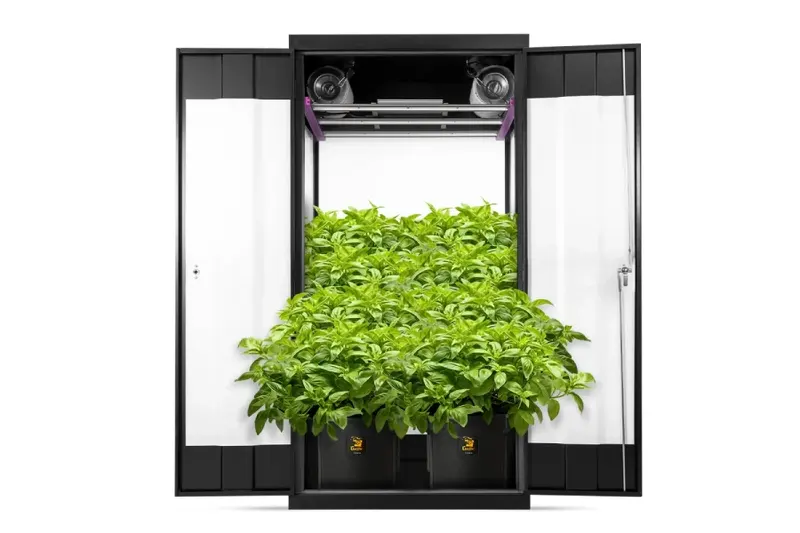
For maximum space efficiency, consider complete grow tent kits that integrate optimized lighting with proper ventilation and environmental control. These comprehensive systems ensure all components work together for flowering success.
Larger Production Areas (4x4 to 5x5 feet)
Serious flowering operations demand powerful systems that maintain uniform intensity across larger canopies. The Xi750 commands 4x4 to 5x5 areas with uncompromising PPFD output that supports maximum flower production.
This flagship model combines targeted full spectrum performance with GXi wireless control, enabling precise spectrum adjustment throughout flowering. Independent channel control lets you fine-tune blue, red, and UV/IR wavelengths to match each flowering stage's unique requirements.
Tri-Channel Spectrum ControlIndependent adjustment of vegetative spectrum, flowering spectrum, and UV/IR wavelengths provides the flexibility needed to optimize results across different flowering stages and plant varieties.
High Efficacy RatingsSystems achieving 2.7+ µmol/J efficacy convert more electricity into usable plant light, reducing energy costs while delivering flowering performance. diodes from Samsung and Osram maintain consistent output throughout 50,000+ hour lifespans.
Intelligent Heat ManagementFlowering plants require precise temperature control. Aircraft-grade aluminum heat sinks run significantly cooler than budget alternatives.
Advanced Flowering Strategies for Maximum Results
Professional growers employ sophisticated techniques that leverage flowering grow light capabilities for results.
Rather than abruptly switching from vegetative to flowering spectrum, gradually transition over 7-10 days. Begin increasing red output while slightly reducing blue intensity one week before switching to 12/12 photoperiod. This gentle transition prepares plants physiologically for flowering without shocking them.
Continue fine-tuning spectrum throughout flowering based on plant response. If flowers develop with excessive spacing between nodes, increase blue slightly. If growth seems stunted, verify your red output meets flowering requirements.
Activate UV wavelengths only during the final 2-3 weeks of flowering to maximize terpene and secondary metabolite production without stressing plants during critical early flower development. Many growers run UV for only 2-4 hours during the middle of the photoperiod when other photosynthetic processes are most active.
Monitor plants closely when introducing UV. Excessive exposure can cause leaf bleaching or stress. Start conservatively and increase gradually based on plant tolerance.
Some advanced cultivators employ variable intensity during flowering, using higher PPFD during peak flowering weeks and reducing intensity slightly during the final week. The theory suggests this mimics natural autumn conditions when daylight weakens, potentially triggering final maturation responses.


Questions & discussion
Have a question or something useful to share? Start the conversation.