What is a Deep Water Culture (DWC) Hydroponic System?
Deep Water Culture (DWC) is a highly effective hydroponic system that involves suspending plant roots in a nutrient-rich, oxygenated water solution. This method allows plants to absorb nutrients and oxygen directly from the water, leading to faster growth and higher yields.
How Does a DWC Hydroponic System Work?
In a DWC system, the plant roots are submerged in a reservoir filled with a nutrient solution. The key to DWC’s success is the constant oxygenation of the water, which is achieved through the use of an air pump and air stones. The roots absorb both nutrients and oxygen, providing everything the plant needs for healthy growth. As a result, plants grown in a DWC system can grow faster than those in soil.
Benefits of Using a DWC Hydroponic System
Deep Water Culture is one of the simplest and most productive hydroponic systems. Here are some key benefits:
Faster Growth Rates: Plants in a DWC system have direct access to water, nutrients, and oxygen, leading to accelerated growth compared to traditional soil-based growing.
Simple Setup: DWC systems are straightforward and require fewer components than other hydroponic setups, making them ideal for beginners.
Cost-Effective: DWC systems are relatively inexpensive to set up and maintain, requiring basic materials like buckets, air pumps, and net pots.
Less Water Usage: DWC systems use less water than soil gardening because the water is recirculated, reducing waste and promoting sustainability.
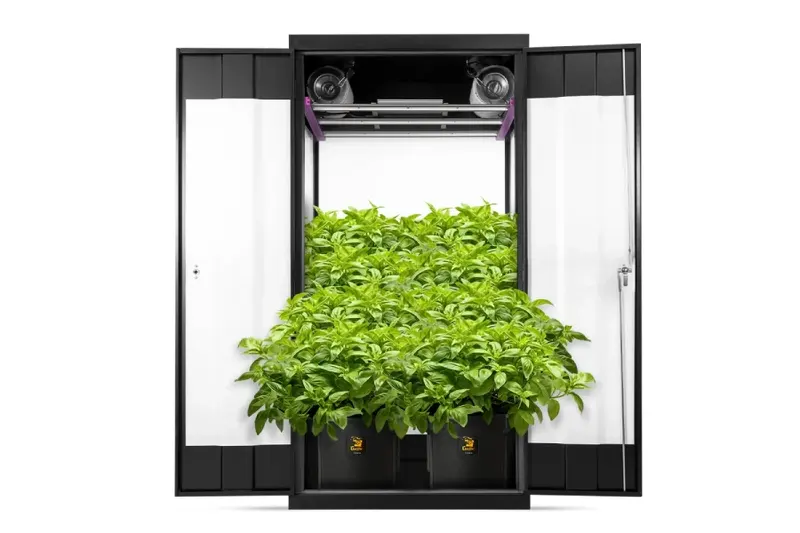
Here’s how to set up your DWC system inside a grow tent:
For beginners, a 3’x3’ or 4’x4’ tent is for a small setup, while larger tents (like 5’x5’ or 8’x8’) can accommodate more plants or more complex systems.
Reservoir: A large container (such as a 5-gallon bucket) serves as the reservoir for each plant, holding the nutrient solution and the plant's roots.
Net Pots: Net pots are suspended in the lid of the reservoir and filled with a growing medium like clay pebbles. The plant grows from the net pot, and the roots dangle into the water below.
Air Pump and Air Stones: An air pump provides oxygen to the nutrient solution by sending air through air stones, which create bubbles in the water to keep the roots oxygenated.
Nutrient Solution: A hydroponic nutrient solution containing essential elements like nitrogen, phosphorus, and potassium is necessary for plant growth.
pH Control Kit: Keeping the pH between 5.5 and 6.5 is critical for nutrient uptake, so having a pH meter and pH adjusters is essential.
Once you’ve gathered your components, follow these steps to set up your DWC system:
Prepare the Reservoir: Fill the reservoir (bucket) with water and mix in the appropriate amount of nutrient solution. Ensure the water level is high enough to reach the bottom of the net pots.
Install the Net Pots: Place the net pots into the lids of the buckets. Fill them with a growing medium like clay pebbles and insert your plants.
Set Up the Air Pump: Connect the air pump to the air stones and place the air stones at the bottom of each reservoir. This ensures constant oxygenation of the nutrient solution.
Monitor pH and EC Levels: Use a pH meter and EC meter to check the pH and nutrient concentration in the water. Adjust as needed to ensure optimal growing conditions.
Choosing the Right Grow Lights for a DWC System
Proper lighting is crucial in a DWC hydroponic system, especially for indoor growing. Gorilla Grow Tents are designed to accommodate a variety of grow lights, ensuring optimal plant growth. Here are the options:
LED Grow Lights: LED lights are highly energy-efficient and provide full-spectrum lighting for all stages of plant growth. They generate less heat, making it easier to maintain a stable environment inside your grow tent.
HID Lights: High-Intensity Discharge (HID) lights, such as Metal Halide (MH) and High-Pressure Sodium (HPS), are powerful and ideal for large grow spaces. However, they produce more heat, requiring better ventilation.
Fluorescent Lights: Fluorescent lights are a great option for seedlings or small plants. They are less intense but suitable for leafy greens and herbs.
Ventilation and Airflow for a DWC System
Here’s what you need for ventilation:
Inline Fan: An inline fan helps remove hot air from the grow tent and brings in fresh air, which helps control the temperature and humidity inside the tent.
Carbon Filter: If you're growing plants that produce strong odors, a carbon filter will help neutralize the smell before the air is vented outside.
Oscillating Fan: Place an oscillating fan inside the tent to circulate air, helping to strengthen plants and prevent heat buildup.
Once your DWC system is up and running, regular maintenance is essential to keep your plants healthy and growing at their . Here’s what to do:
Monitor Water Levels: Check the water levels in your reservoir daily. The water should cover the roots but not flood the net pots.
Check pH and Nutrient Levels: Use a pH meter and EC meter to check the pH and nutrient concentration. Adjust the pH to keep it within the 5.5-6.5 range and add nutrients as needed.
Change the Water: Change the nutrient solution every 1-2 weeks to prevent the buildup of salts and other unwanted compounds in the water.
Deep Water Culture is one of the most efficient and straightforward hydroponic systems for indoor growing. Whether you're new to hydroponics or an experienced grower, a DWC system offers an excellent balance of simplicity and performance, making it a great choice for any indoor garden setup.
Do I need to use a specific type of water for DWC systems? It's to use filtered or reverse osmosis (RO) water to avoid any contaminants that can affect the pH and nutrient balance of the solution.
Can I use a DWC system for any plant? DWC systems work well for many types of plants, including leafy greens, herbs. However, larger fruiting plants may require more advanced hydroponic setups.
How much space do I need for a DWC system? Larger systems may require more space, such as a 5'x5' tent or bigger.


Questions & discussion
Have a question or something useful to share? Start the conversation.