Ready to level up your gardening game? At this stage in your growing experience, you're prepared to move beyond basic plant care and master the most efficient way to cultivate your garden. A critical, but often overlooked, element is the Daily Light Integral (DLI). This guide will demystify DLI, explaining how this crucial metric will make you a more informed and successful grower.
But how are you going to be able to understand this complex scientific plant process with so much information out there?
DLI, or Daily Light Integral, is simply the total amount of light your plant receives in a single 24-hour period.
It measures the total amount of Photosynthetically Active Radiation (PAR) that hits the plant over a full day. Think of DLI as a way to quantify the total dose of light your plant got today.
PAR may sound complex, but the concept is straightforward. PAR is the light your plant uses to eat.
It describes the specific wavelengths of light that activate the chloroplasts in a plant, initiating the magic of photosynthesis.
These usable wavelengths typically fall within the visible light spectrum.
The more PAR your plants absorb, the more sugar (energy) they can produce through photosynthesis, directly impacting their growth rate.
Your plants rely on photosynthesis to convert light, water, and carbon dioxide into sugars and oxygen. These sugars are the building blocks that allow the plant to increase its mass and grow.
By optimizing the total number of light photons (DLI) hitting your plant, you are directly optimizing your plant’s growth rate.
Expert Insight: Certified Professional Horticulturist Leslie Halleck, author of Gardening Under Lights, highlights the importance of DLI in combining the science of light with successful home gardening.
The DLI calculation combines light intensity and duration.
PPFD (Photosynthetic Photon Flux Density): This is the intensity of the light at a specific spot on your plant's surface. PPFD is fancy science talk for the instantaneous amount of usable light photons that fall on a surface of a plant in a certain amount of time.
Photoperiod: This is simply the amount of time (hours per day) your plant spends under light. This is the most important part of the equation to control. Without knowing the correct photoperiod for your plant, you are just guessing at the optimal DLI.
The Proportion Rule: DLI works like a proportion. A high intensity of light (PPFD) with a short-time frame can achieve the same DLI as a low-intensity light with a long-time frame. The secret is finding the balance for your specific plant.
Actionable Tip: If you know that your carrots are "long day" plants or your soybeans are "short day" plants, you will be able to properly determine your optimal DLI and give your plants the light possible.
PPF (Photosynthetic Photon Flux): This is the total number of light photons released by the light fixture itself. It's a measure of the light source, not the light on your plant.
PPFD (Photosynthetic Photon Flux Density): This refers to the actual number of light photons that hits a specific area (i.e., your plant).
Distance Matters: The height of the light fixture factors heavily into PPFD. Light will go down from the source in a triangular shape and dissipate the further it gets away.
Closer is Brighter: The closer the light is, the higher the PPFD will be. An increased PPFD will result in a higher DLI over the same time frame.
Plants are incredibly diverse and thrive in different circumstances. Just look at nature—there are very few ecosystems where plants do not exist, even in harsh environments like deserts where cacti thrive.
Luckily for you, you don't need to produce conditions for your plants to thrive. All you need to do is get your DLI in a good range for your specific species.
You should research your specific plant, but here is what happens when you miss the mark:
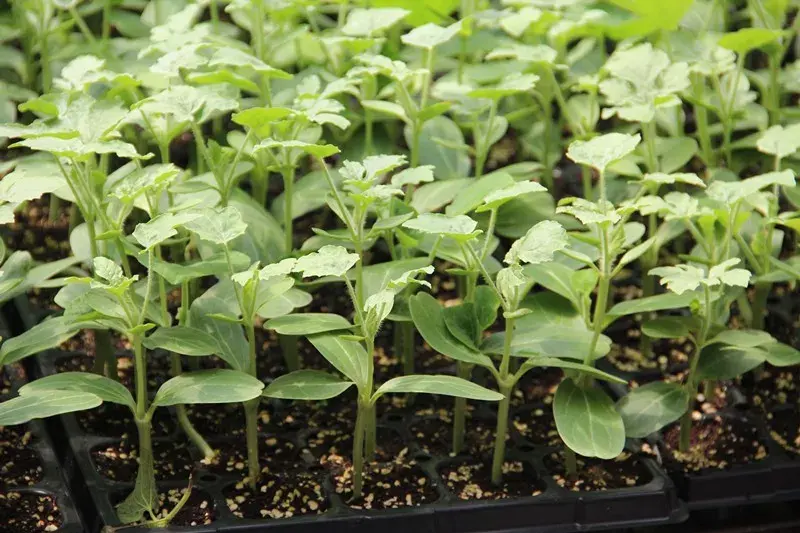
Is your DLI is too low? you can experience slow rooting, delayed flowering, weak branching, or low flower number. Your plant will be weak because it is unable to produce enough plant mass.
Is your DLI is too high? it can result in leaf burn or drying out. This is detrimental as your plant loses color while also losing the capability to produce more plant mass.
DLI varies widely so it is important to do your research to find out how these factors affect you and your plants. Outdoor DLI can range from 5 to 60 mol*m*d and Greenhouse DLI rarely goes above 25 mol*m*d.
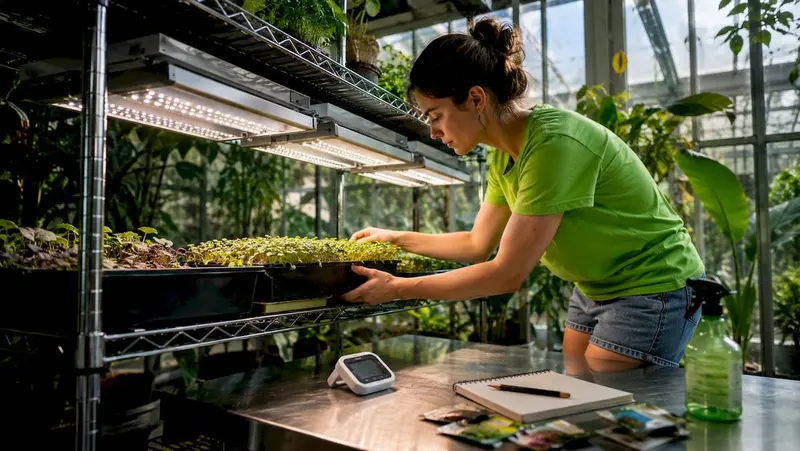
Plants growing in a greenhouse will rarely have a DLI over 25 due to the opaque windows. This is important to keep in mind if you grow in a greenhouse, you may need to add light fixtures if you need a higher DLI.
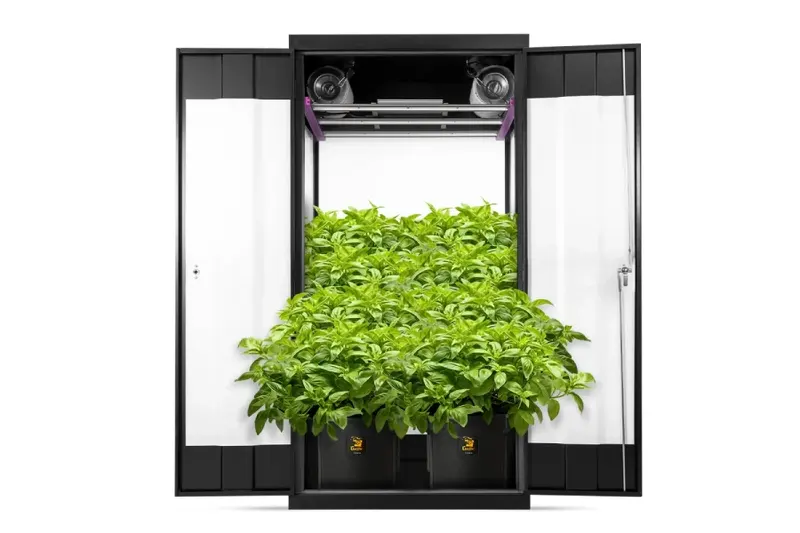
All you need to do is get it in a good range. If your DLI is too low, you can have slow rooting, delayed flowering, weak branching or low flower number. Your plant will be weak as it is unable to produce lots of plant matter. If the DLI is too high it can result in leaf burn or drying out, which will be detrimental as your plant will lose its color while also losing the capability to produce more plant mass. The Aspect and Highland Grow lights come equipped with timers for you to plan out the proper DLI for your precious plants, to make sure they are getting the light the do (and don't) need.


Questions & discussion
Have a question or something useful to share? Start the conversation.