Hydroponics or aeroponics? Indoor strawberries can be grown using either hydroponics and aeroponics, both of which drastically reduce water usage. Aeroponic and hydroponic farming systems save up to 95% and 80% water compared to the traditional farming system respectively.
The only difference between them is the medium which is used in the growth of the plants. Hydroponics uses a nutrient-rich solution fed by a watering system, whereas with aeroponics, a mist-filled with essential nutrients is regularly sprayed on plant roots.
Growing strawberries either way results in quicker growth times. According to botanists, hydroponics can actually have a 30-50 quicker growth rate and more substantial yield than using regular soil, equating to high yield. The plants also can deliver a longer growing season, removing the issue of a summer glut, stabilising prices for the grower and consumer. With good replacement plant planning strawberries can be grown all year round to a very high standard.
Polytunnels offer excellent weather protection and provide the optimum conditions for strawberry growing to generate uniform high quality crops. Without exposure to rain, there is little disease and rot to inflict damage. Growing strawberries using polytunnels also means fewer pesticides and chemicals are needed. Protection against frost encourages crops to come earlier and extends the heat hours the crops receive, therefore extending the British growing season.
Greenhouses also provide a pesticide-free growing environment to grow flavoursome strawberries, with an opportunity for increased yield and high-quality fruit. A hydroponic greenhouse maximises energy use from photosynthesis to increase crop yield. Another advantage of hydroponic greenhouse growing is shortened crop cycles and accelerated plant growth.
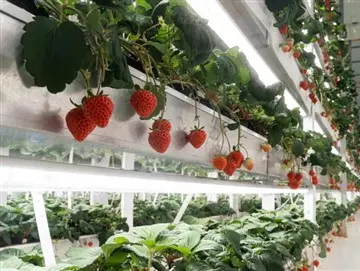
Vertical farming allows for easier harvesting and helps prevent damage to the fruit. Tesco strawberry supplier and West Sussex fruit grower Direct Produce Supplies Ltd (DPS) claims vertically-grown strawberries require 50% less water, leading to a 90% reduction in carbon footprint per kilo of fruit. It also observes that yields from vertically grown crops are significantly higher than via conventional production methods, yielding an estimated five times more fruit per square metre than existing methods.
Use supplementary LED grow lights The use of LED grow lights to support indoor growing of strawberries can bring many benefits, not least increased yield and quality but also improved cost efficiency. LED grow lights have become the most popular type of grow lights over the past few years due to their energy efficiency, temperature and light spectrum functionality. These lights can be installed in a custom framework which has not only an optimised light spectrum for efficiency, but also overall growth cycle of strawberry plants, to offer all year-round production. They also last longer in the fridge, providing long-term value for money.
High-performance LED luminaires also offer growers the opportunity to alter and optimise the light recipe to increase the number of strawberry flowers. Partnering with an LED grow light expert will enable you to work with the most advanced LED technology combined with a custom light recipe to match your crop and environment.
Use LED lights to help prevent pathogens Indoor farming can help protect against pests and diseases, which cause crop damage through pathogens. However, recent research concludes that although indoor farms do in principle control what organisms enter the system, total control is impossible. Using LED lights has an antibacterial effect and prevents these pathogens. The disinfection technology kills bacteria, fungus and mould, emitting proper blue-light wavelength of high-intensity visible light that excites certain molecules in harmful micro-organisms through photo-activation.
It provides scavenger territory for bees and enables them to pollinate. Without bees to help pollinate plants in vertical farming setups, the process becomes difficult and costly. Considerable savings on labour costs can be made; depending on a greenhouse’s size, it can take up to 10 times the number of employees to hand-pollinate crops at the same rate as bees.

Questions & discussion
Have a question or something useful to share? Start the conversation.